











How Electrostatic Spray Technology Prevents Infection Spread?
CIOAdvisor Apac | Wednesday, August 05, 2020
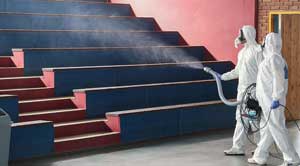 Electrostatic technology covers more surfaces in less time and saves the facility money by offering the surface disinfection to prevent the spread of illness-causing bacterias and viruses.
FREMONT, CA: Electrostatic spray technology is a brand new way to apply cleaners, sanitizers, and disinfectants to help the facilities to treat surfaces, often in less time and with better coverage than conventional cleaning methods.
Electrostatic sprayers work by charging the liquids as they pass through a sprayer nozzle. It works by generating charged droplets that repel one another and seek out environmental surfaces that they stick to and even wrap around all sides. The obtained result is a uniform coating of sanitizer or disinfectant on sprayed objects, comprising hard-to-reach places that manual cleaning can miss.
Electrostatic sprayers can be used anywhere. Effective electrostatic sprayers can engulf large areas in minutes and can be used in any place. As the surfaces are coated evenly, wiping is not needed, preferably only once to keep surfaces polished.
Electrostatic spray technology can be customized to meet their needs. Some choose to use electrostatic sprayers as an alternative for manual cleaning and disinfecting processes like wipes and trigger sprays. In contrast, others use technology as an additional step to augment standard cleaning and ensure comprehensive surface coverage.
These sprayer systems are available in varied designs, like rolling cart systems, handheld sprayers, as well as backpack sprayers. Handheld and backpack models provide operators flexibility but can be substantial when filled with liquid. Besides, some sprayers use battery power to impart a charge on the liquids, whereas others use a cord to draw the power from a standard outlet plug. Even though cords can pose an extra challenge, they offer consistent power and droplet charging, which results in better system performance. Batteries aren't powerful enough to generate a constant, reliable charge to provide the electrostatic performance needed to cover surfaces entirely and evenly every time its sprayed.
See also: Top Urology Device Companies

Read Also

